
News
Categories List
How Do You Properly Load and Secure Cargo on a Lowbed Trailer
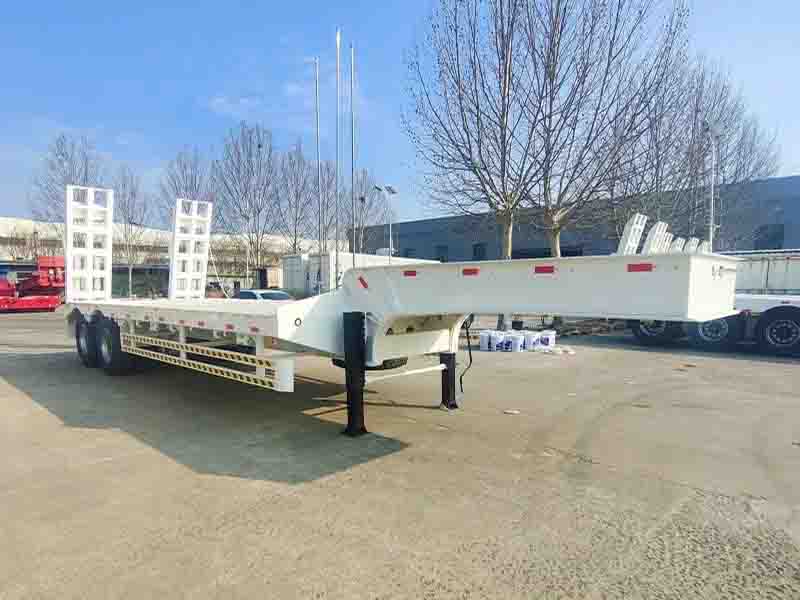
Loading and securing cargo on a Lowbed Trailer is a critical operation that demands precision, planning, and the right equipment. A single error can lead to catastrophic accidents, cargo damage, and significant financial loss. At Xinfada, we understand that safety and efficiency start with a robust trailer foundation and a meticulous process. Our engineering focus ensures that every Xinfada trailer provides a stable, reliable platform for your most demanding heavy-haul tasks.
The Foundation: Understanding Your Xinfada Lowbed Trailer
Before loading begins, knowing your trailer's exact parameters is non-negotiable. Using a trailer that matches your load is the first rule of safety.
Critical Pre-Load Checklists:
1.Review the trailer’s weight capacity and deck dimensions.
2.Inspect the deck, ramps, and winch tracks for damage.
3.Verify the functionality of all tie-down points and recessed D-rings.
4.Ensure you have the correct permits for oversized/over-dimensional loads.
Xinfada: Built for Secure Hauling
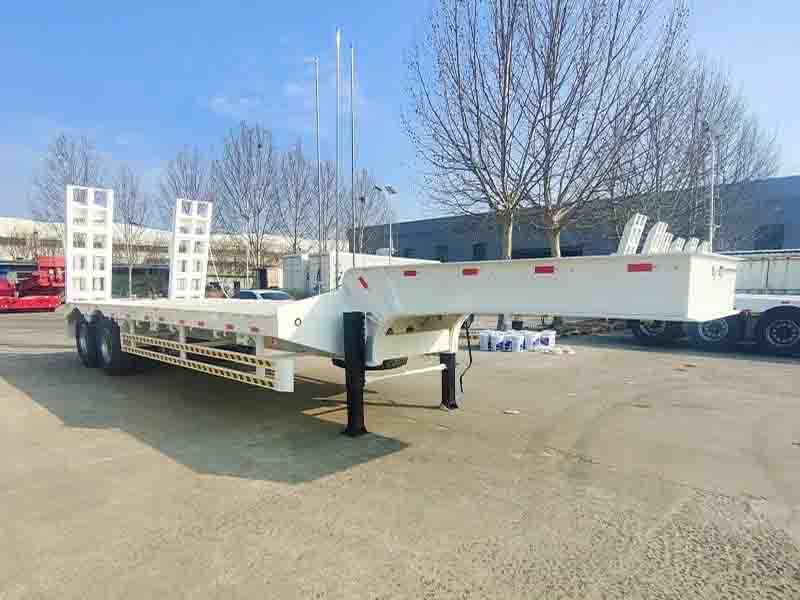
Our Xinfada Lowbed Trailer is designed with security as a core feature. Here are key specifications that facilitate proper cargo handling:
The Step-by-Step Securement Protocol
Plan & Center the Load: Calculate the load's weight distribution. The load's center of gravity must be positioned over the trailer’s axles.
Utilize Friction: Place the load directly on the trailer’s anti-skid deck. Never use materials that create a slick surface between the cargo and deck.
Select Proper Securement Devices: Use chains, steel straps, or synthetic webbing with a Working Load Limit (WLL) appropriate for the cargo weight.
Apply Direct Tie-Downs: Secure the cargo to the trailer using the D-rings. Follow the Federal Motor Carrier Safety Administration (FMCSA) rule of securing at least one tie-down for every 10 feet of cargo.
Check Tension & Re-check: Tighten all binders evenly. Re-tension after moving the vehicle a short distance, as straps and chains can loosen.
Leave A Reply
Please give us a message
Xinfada Import & Export (Shandong) Co., Ltd.
Location