
News
Categories List
Driven by the "Travel+" Strategy, JETOUR's Boxy SUVs Accelerate Global Expansion
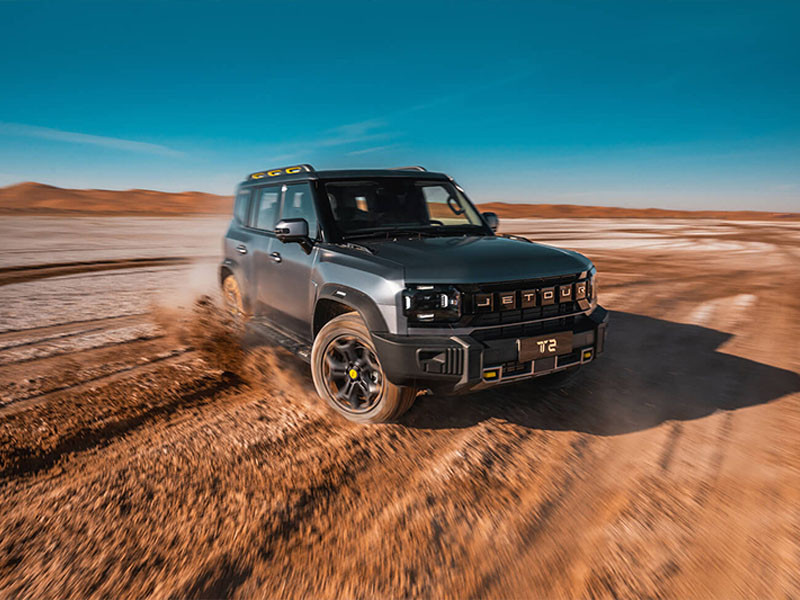
As global demand for off-road SUVs continues to grow and consumer mobility preferences continue to evolve, automakers are shifting from market expansion to building stronger global capabilities across products, operations and brand development. In June 2026, JETOUR T2 surpassed 500,000 cumulative global sales. The boxy SUV reached the milestone in just 33 months after launch, making it one of the fastest-growing models in the boxy SUV segment.
JETOUR's cumulative global sales also exceeded 2.4 million units. For an eight-year-old brand, the sale milestones reflect the company's progress in advancing its “Travel+” strategy, expanding its product portfolio, strengthening its global operations and building a global user ecosystem.
A Product Portfolio Built for Diverse Markets
The success of JETOUR T2 underscores the brand's strategic focus on the light off-road SUV segment and its ability to respond to evolving consumer demand worldwide. To serve a broader range of markets and use cases, JETOUR has built a product portfolio centered on the T Series and G Series, offering mobility solutions tailored to diverse customer needs.
The T Series focuses on the light off-road market, catering to both urban mobility and outdoor exploration. Represented by the T2, this series offers both fuel and hybrid powertrain options, and comes standard with the XWD Intelligent Four-Wheel Drive System and the "7+X" One-Click Off-road Mode. This ensures daily driving comfort while further lowering the threshold for off-road experiences.
JETOUR is also set to launch updated versions of the T2 in the Middle East in Q4 this year, featuring comprehensive upgrades in vehicle connectivity system and intelligent driving experiences.
Positioned in the premium off-road segment, the G Series expands JETOUR's product offering with higher levels of performance and intelligent technologies to meet more diverse customer needs. Together, the T Series and G Series enable JETOUR to strengthen its competitiveness across global markets by addressing a broader range of consumer preferences and driving scenarios.
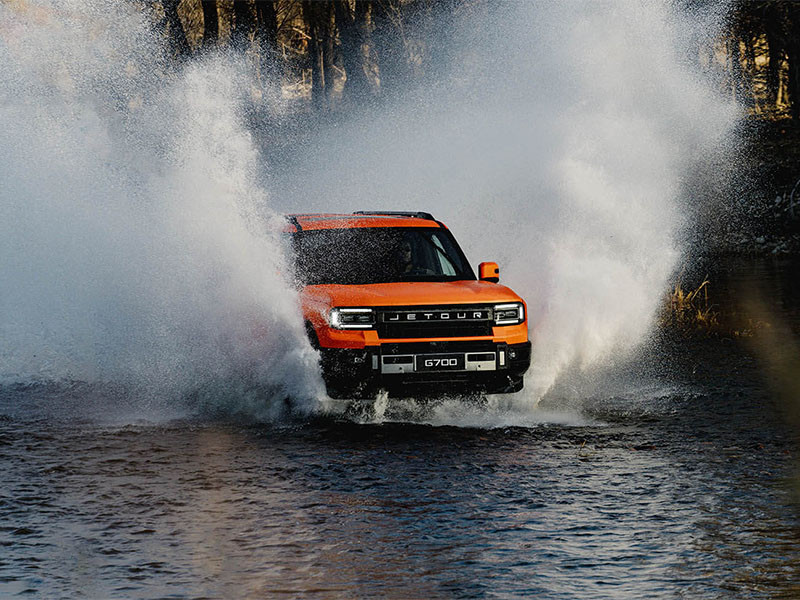
"Travel+" Strategy Driven by Global User Needs
Products may attract customers, but a strong user ecosystem helps sustain long-term growth. As travel increasingly extends beyond daily commuting to include outdoor exploration and leisure, JETOUR's “Travel+” strategy connects products, users and experiences, positioning the vehicle as a companion for a wider range of journeys.
To support this strategy, JETOUR has continued to strengthen its global user ecosystem. The brand has established more than 300 JETOUR CLUBs worldwide, bringing together over 31,000 owners. In 2025, JETOUR organized more than 500 road trips, camping events and other community activities, while personalized vehicle customization services expanded to more than 30 countries and regions. In late June 2026, the Second Global Boxy SUV Conference brought together more than 1,100 media representatives, customers and industry guests from around the world to experience the light off-road lifestyle, further strengthening the connection between the brand and its global user community and transforming the “Travel+” philosophy into a shared brand experience.
Global System Drives Sustained Growth
Product innovation and a growing user community have fueled JETOUR's global momentum. Supporting that growth is an expanding global operating system that enables the brand to scale across diverse markets. Guided by its globalization philosophy of "In somewhere, For somewhere, Be somewhere," JETOUR continues to strengthen localized R&D, manufacturing and operations to build long-term competitiveness worldwide.
In recent years, JETOUR has continued to strengthen its global capabilities across R&D, manufacturing, supply chain, sales and after-sales services. The company now operates six global R&D centers, with vehicle development following unified global validation standards and testing conducted across extreme heat, extreme cold, high humidity and high-altitude environments to improve product adaptability in diverse markets.
Leave A Reply
Please give us a message
Xinfada Import & Export (Shandong) Co., Ltd.
Location